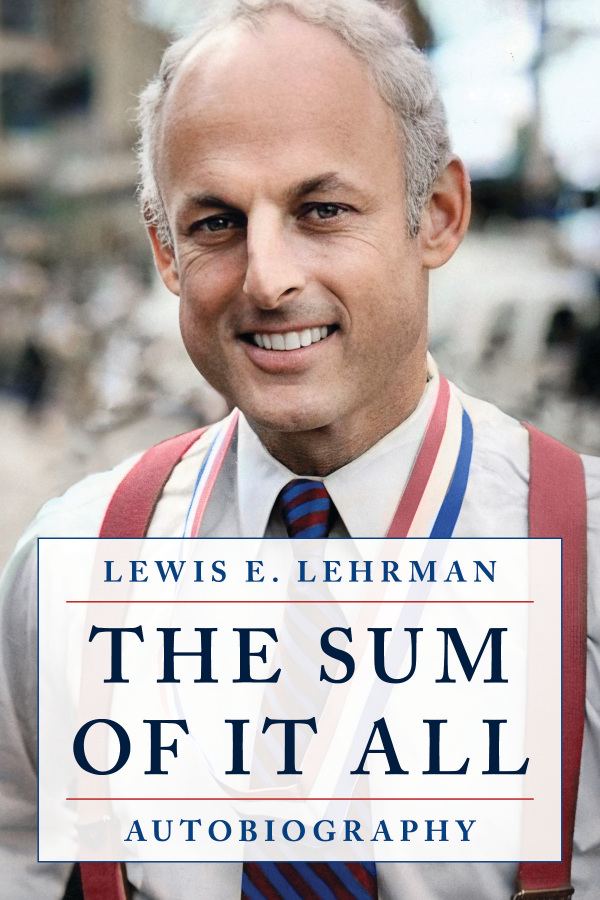
The Sum of It All
“Like many of you, I was a lucky grandson of four immigrant grandparents – as I was born in America. My immigrant grandfather Louis was a peddler – and a patriot, who believed, with the religious founders of our country, that America was the New Jerusalem…”
From humble roots in Harrisburg, Pennsylvania, Lehrman is the grandson of immigrants. He excelled as a Yale scholar, then grew the family business into a national company. He advised President Reagan on economic and monetary policy and ran for governor of New York. Lehrman is recognized for founding, with Richard Gilder, the Gilder Lehrman Institute of American History. Gilder Lehrman endows the Lincoln Prize; oversees and publicizes a significant collection of American historical documents and artifacts; and serves students, teachers, and scholars nationwide. In 2005, Lehrman received the National Humanities Medal for his groundbreaking work in history and education.
In this intimate autobiography, Lehrman gives vibrant portraits of and reflections on family life, business success, political leadership, historical enterprise, and his faith journey. Clearly written chapters focus on life’s key questions. Interviews, recollections, and photographs introduce Lehrman’s many influential partners and associates. Family, friends, and colleagues share touching stories. Correspondence with scholars, economists, and statesmen combine with archival material from Lehrman’s campaigns, books, and foundations.
With a direct and unmistakable style, Lehrman reveals himself from many angles, making his wide experience available to all. With its triumphs, achievements, and sometimes unexpected choices, this is the story of a man on a mission. Early in life he made the faith of the early American founders and of Abraham Lincoln his own, and he has worked throughout his life to embrace, celebrate, and protect the American Dream so that all people might share in its success as he has.
In a richly documented life story, Lehrman celebrates the contributions of family, friends, partners, and colleagues. But he saves his highest praise for his marriage to Louise, whom he first met after “walking west on East 80th Street” in New York City and without whom—as he never tires of saying—none of it would have been possible.
Lewis Lehrman is the exemplary American leader of his generation. Now he recounts his heroic life of intellect, enterprise, family, and faith, summoning all ensuing generations—at this moment—to the battlements of a historic vision and legacy.
George Gilder, author of Wealth and Poverty
What a life Lew Lehrman has led. And what a story he tells. Scholar, entrepreneur, politician, philanthropist, financier, farmer, author, husband, father, and grandfather, he is the contemporary American that—I am going to venture a speculation—Alexander Hamilton would be proudest of.
James Grant, founder and editor, Grant’s Interest Rate Observer
This is the story of a life well lived, and an intelligent paean to the conditions that can make such lives possible. It is a story, finally, of gratitude—towards all who worked alongside him—and humility—before the heart searchings and insights of those who inspired and guided him.
Richard Brookhiser, Senior Editor, National Review
The Sum of It All is now available through Rowman & Littlefield, Amazon, and Barnes & Noble.
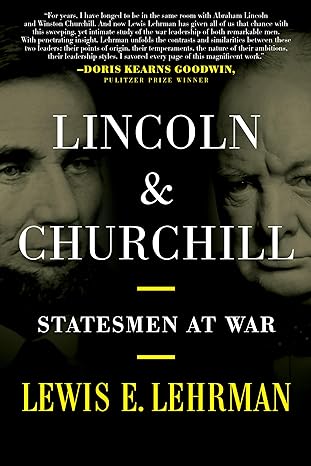
Lincoln & Churchill: Statesmen at War
A Renowned Historian Gives New Perspective on Statesmen at War.
Lewis E. Lehrman, a renowned historian and National Humanities Medal winner, gives new perspective on two of the greatest English – speaking statesmen – and their remarkable leadership in wars of national survival.
Abraham Lincoln and Winston Churchill, as commanders in chief, led their nations to victory-Lincoln in the Civil War, Churchill in World War II. They became revered leaders – statesmen for all time. Yet these two world-famous war leaders have never been seriously compared at book length. Acclaimed historian Lewis Lehrman, in his pathbreaking comparison of both statesmen, finds that Lincoln and Churchill-with very different upbringings and contrasting personalities-led their war efforts, to some extent, in similar ways. As supreme war lords, they were guided not only by principles of honor, duty, freedom, but also by the practical wisdom to know when, where, and how to apply these principles. They made mistakes which Lehrman considers carefully. But the author emphasizes that, despite setbacks, they never gave up.
Even their writings and speeches were swords in battle. Gifted literary stylists, both men relied on the written and spoken word to steel their citizens throughout desperate and prolonged wars.
Both statesmen unexpectedly left office near the end of their wars – Lincoln by the bullet, Churchill by the ballot.
Lincoln & Churchill: Statesmen at War is available through Amazon.
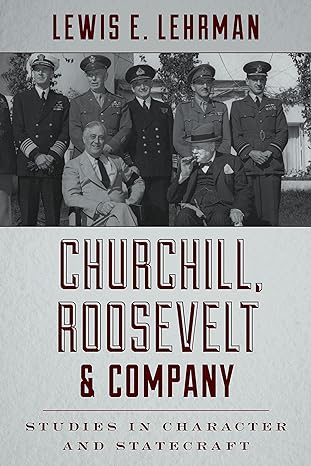
Churchill, Roosevelt & Company: Studies in Character and Statecraft
During World War II the “special relationship” between the United States and Great Britain cemented the alliance that won the war in the West. But the ultimate victory of that partnership has obscured many of the conflicts behind Franklin Roosevelt’s charm and Winston Churchill’s victory signs – the clashes of principles and especially personalities between and within the leadership of the two nations.
Synthesizing an impressive variety of sources from memoirs and letters to histories and biographies, Lewis E. Lehrman explains how the Anglo-American alliance worked – and occasionally did not work by presenting portraits and case studies of the men who worked the back channels and back rooms, the generals and the admirals, the secretaries and under secretaries, ambassadors and ministers, responsible for carrying out Roosevelt’s and Churchill’s agendas while also pursuing their own. Such was the conduct of Joseph Kennedy, American ambassador to England often at odds with FDR; generals George C. Marshall and Dwight D. Eisenhower; spymasters William Donovan and William Stephenson; Secretary of State Cordell Hull, whom FDR frequently bypassed in favor of Under Secretary Sumner Welles; the Soviet spy in the leadership cadre of the US Treasury, Harry Dexter White, and his struggle with Lord Keynes; British ambassadors Lord Lothian and Lord Halifax; and, above them all, Roosevelt and Churchill. The President and the Prime Minister had the difficult task, not always well – performed, of managing their subordinates. Churchill and Roosevelt frequently chose to conduct foreign policy directly between themselves, and with Stalin.
Scrupulous in its research and fair in its judgments, Lehrman’s book reveals the personal diplomacy, the character and statecraft, at the core of the leadership of the Anglo-American alliance.
Churchill, Roosevelt & Company: Studies in Character and Statecraft is available through Amazon.
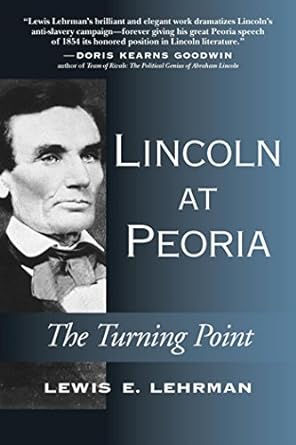
Lincoln at Peoria: The Turning Point
During World War II the “special relationship” between the United States and Great Britain cemented the alliance that won the war in the West. But the ultimate victory of that partnership has obscured many of the conflicts behind Franklin Roosevelt’s charm and Winston Churchill’s victory signs – the clashes of principles and especially personalities between and within the leadership of the two nations.
Synthesizing an impressive variety of sources from memoirs and letters to histories and biographies, Lewis E. Lehrman explains how the Anglo-American alliance worked – and occasionally did not work by presenting portraits and case studies of the men who worked the back channels and back rooms, the generals and the admirals, the secretaries and under secretaries, ambassadors and ministers, responsible for carrying out Roosevelt’s and Churchill’s agendas while also pursuing their own. Such was the conduct of Joseph Kennedy, American ambassador to England often at odds with FDR; generals George C. Marshall and Dwight D. Eisenhower; spymasters William Donovan and William Stephenson; Secretary of State Cordell Hull, whom FDR frequently bypassed in favor of Under Secretary Sumner Welles; the Soviet spy in the leadership cadre of the US Treasury, Harry Dexter White, and his struggle with Lord Keynes; British ambassadors Lord Lothian and Lord Halifax; and, above them all, Roosevelt and Churchill. The President and the Prime Minister had the difficult task, not always well – performed, of managing their subordinates. Churchill and Roosevelt frequently chose to conduct foreign policy directly between themselves, and with Stalin.
Scrupulous in its research and fair in its judgments, Lehrman’s book reveals the personal diplomacy, the character and statecraft, at the core of the leadership of the Anglo-American alliance.
Lincoln at Peoria: The Turning Point is available through Amazon.
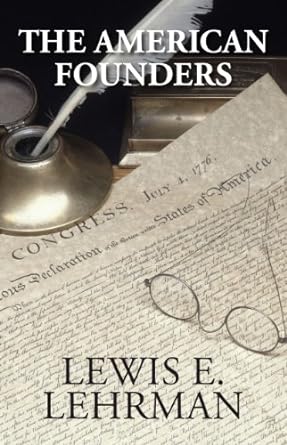
The American Founders
The Founders knew that their citizens and their government colleagues were imperfect. The Founders themselves were imperfect. In an imperfect world of imperfect people it could not be otherwise. Indeed, they could be petty. With the hindsight of the historian, their decisions may appear questionable. The Founders could be pessimistic about democracy. “Public affairs go on pretty much as usual: perpetual chicanery and rather more personal abuse than there used to be,” wrote John Adams to Thomas Jefferson only weeks before they died. “Our American Chivalry is the worst in the world. It has no Laws, no bounds, no definitions; it seems to be all a Caprice.”
However, the American Founders were as able a political leadership as any in recorded history. Whatever their faults and fears, they acted, in peace and war, as if America s future were bright.
Before leaving for his inauguration in 1789, President-elect Washington wrote: “My endeavours shall be unremittingly exerted (even at the hazard of former fame or present popularity) to extricate my country from the embarrassments in which it is entangled, through want of credit; and to establish, a general system of policy, which, if pursued will insure permanent felicity to the Commonwealth. I think I see a path, as clear and as direct as a ray of light, which leads to the attainment of that object. Nothing but harmony, honesty, industry, and frugality are necessary to make us a great and happy people.”
The American Founders is available through Amazon.
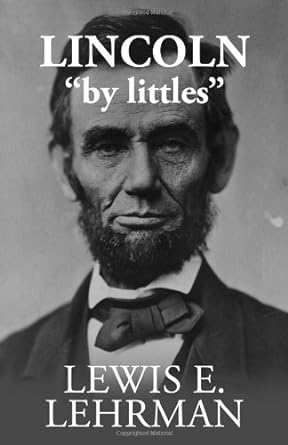
Lincoln 'by littles'
Excerpts from Lincoln ‘by littles’
“Abraham Lincoln seldom got the chance to go to school. He went to school ‘by littles,’ he said, and received fewer “In the untrammeled interior of the mind s eye, young Lincoln followed his unrestrained desire to explore new intellectual worlds, even the world of American history, of politics, of law. There, in the frictionless world of thought and fantasy, young Abraham Lincoln found the freedom, the vocation, the solace he yearned for, unshackled from the irremediable, unrequited, hard labor of farmer and village artisan.”
“Mr. Lincoln made American politics not only a struggle for personal power and prestige, but instead, a campaign of just ideas, a battle of first principles, a vindication of right-minded policy.”
“The self-tutored lawyer from Illinois could not understand those ‘don’t care’ politicians, such as Senator Stephen A. Douglas, who pretended indifference to involuntary servitude.”
“For Lincoln, there could be no retreat from the fundamental principles of the Declaration of Independence.”
“Lincoln was ambitious to use government to good effect. Government, he said, should enable men and women to do the things they cannot do, or do so well, for themselves in order to develop their freedom, their future, and their country.”
Lincoln ‘by littles’ is available through Amazon.
Money, Gold and History
In Money, Gold, and History, Lewis E. Lehrman raises three questions:
1) Will the perennial global monetary crisis and the century-old age of inflation still be underway a generation from now?
2) Will the global economy have succumbed to national rivalries, mercantilism, financial disorder, and entropy?
3) Or, will monetary order have been restored by the leading nations of the world in their own self-interest?
The solution is authorized by the United States Constitution in Article I, Sections 8 and 10 whereby the control of the quantity of dollars in circulation is entrusted to the hands of the people because the definition of the dollar was entrusted to Congress. In 1792, Congress defined by statute the dollar as a specific weight unit of precious metal.
Money, Gold, and History is available through Amazon.
The True Gold Standard: A Monetary Reform Plan without Official Reserve Currencies
In the Newly Revised and Enlarged Second Edition There are a few lessons to take away. One lesson of this book is that, contrary to conventional academic opinion, the quantity of money in circulation is not the problem. The problem of monetary disorder is how money is issued.
A second lesson of this book is the pernicious falsehood, spread worldwide, by the trendy quotation drawn from John Maynard Keynes: In the long run we are all dead. Such indifference or cynicism towards future generations may characterize a few self-centered individuals. But throughout the world, for parents and grandparents and most individuals, the long-run common good is an essential preoccupation of every generation sharing the human condition and its hope for the future.
A third lesson of this book is that there is a time-tested way out of the present world financial crisis.
This Monetary Reform Plan proposes to establish the framework for an enduring, stable value for the United States dollar; that is, to define the dollar by statute as a certain weight unit of gold to be coined into lawful money.
A dollar convertible to gold is warranted by the United States Constitution in Article I, Sections 8 and 10. A monetary standard of precious metal (gold and silver) was the monetary foundation, the gyroscope of the great Industrial Revolution of the western world, giving rise, after the Coinage Act of 1792, to a stable American currency. For two centuries, free markets, free prices, and international trade were gradually integrated worldwide by the gradual adoption among nations of the international gold standard. Major wars did interrupt. But over the long run, sound money, free prices, and economic productivity led to population expansion, unprecedented growth of international trade, and prosperity.
Employment growth, a rising standard of living, and a reasonably stable price level became the economic hallmarks of the United States from the Coinage Act of 1792 until 1971 when the last vestige of dollar linkage to gold was suspended. The rise of thirteen impoverished colonies by the sea to world leadership was associated with a stable dollar, that is, a dollar convertible to gold.
After 1971, floating-paper currencies, mixed with pegged and manipulated exchange rates, have caused alternating episodes of inflation, deflation, and protectionism to this very day. There has, it is true, been economic growth since 1971, but the real (inflation-adjusted) American standard of living has been falling. Average, hourly, real wages have stagnated since 1971, only compensated by more family members at work. Average, real family income has fallen for more than a decade making the American paper money era, during its most recent chapter, a false inflationary prosperity except for the very rich.
Throughout ancient and modern history it was the unique properties of the gold monetary standard which made it universally acceptable to trading peoples in the market. The test of what The Purpose of The True Gold Standard will endure as honest money can only be studied in the empirical laboratory of human history; mathematical abstractions, drawn from the blackboards of academic economists, will not do. Because trust and universal acceptability are the trademarks of honest money these virtues must be affirmed, in the long run, by the tests of the open market, and then reinforced by wise, limited, and prudent governments which understand and embrace the inductive, tested verdict of the market.
The True Gold Standard is available through Amazon.
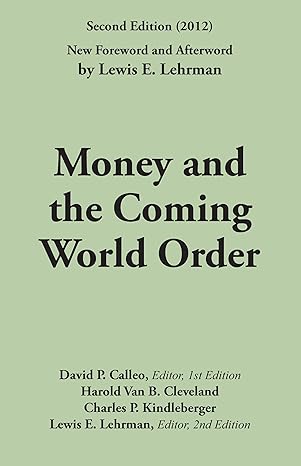
Money and the Coming World Order
Today, national economic policy making is largely concerned with the problems of unemployment and inflation. More precisely, it is their simultaneous combination in nearly all Western economies which preoccupies policy makers. As these problems grow worse, the stakes rise higher. We know that either severe unemployment or sustained inflation, let alone both together, can be expected to have the most serious consequences for liberal democracy.
Almost four decades ago, during America’s worst economic period since the Great Depression, I wrote the words above in the first edition of this book (1976). Now, in 2012, one is tempted to quote the inimitable Yogi Berra: this is deja vu all over again.
Thus, the questions arise: Will the perennial global monetary crisis and the century-old age of inflation be underway forty years from now? Will the global economy have succumbed to national rivalries, mercantilism, currency wars, financial disorder and entropy? Or, will monetary order have been restored by the leading nations of the world in their own self-interest? The passage of almost forty years has not changed my mind; there is a necessary and sufficient solution to the problem of financial disorder. My conviction has only grown deeper that American and world prosperity depend on monetary reform, Federal Reserve reform, and restoration of international monetary order. American public and private finances have been sustained during the past generation by running down the immense capital laid up for us by centuries of frugal, enterprising forbearers. This liquidation of national capital for current, unrestrained, consumption may have a long, but finite life. The endgame is financial reform or national bankruptcy. National bankruptcy or its equivalent (systemic currency depreciation) is not inevitable. Monetary reform, led by America, is still plausible, especially because monetary reform has again become a national political issue.
— Lewis E. Lehrman, 2012
Money and the Coming World Order reveals the parallels between past and present and demonstrates the need for a Gold Standard now.
Money and the Coming World Order is available through Amazon.